An exciting new collaboration is bringing together the Chan Zuckerberg Initiative’s education initiative (now Learning Commons), Anthropic, and leading education nonprofits to create something transformative for the future of teaching and learning: free, open-source infrastructure that helps Edtech companies build AI-powered educational tools grounded in learning science.
If you’re developing educational technology, this collaboration opens access to tools that make it easier and more affordable to strengthen classroom experiences — from aligning content to state academic standards to evaluating whether AI-generated outputs are pedagogically sound and age-appropriate. These resources aren’t just theoretical advances; they’re practical, field-tested solutions designed to bring learning science into everyday teaching practice.
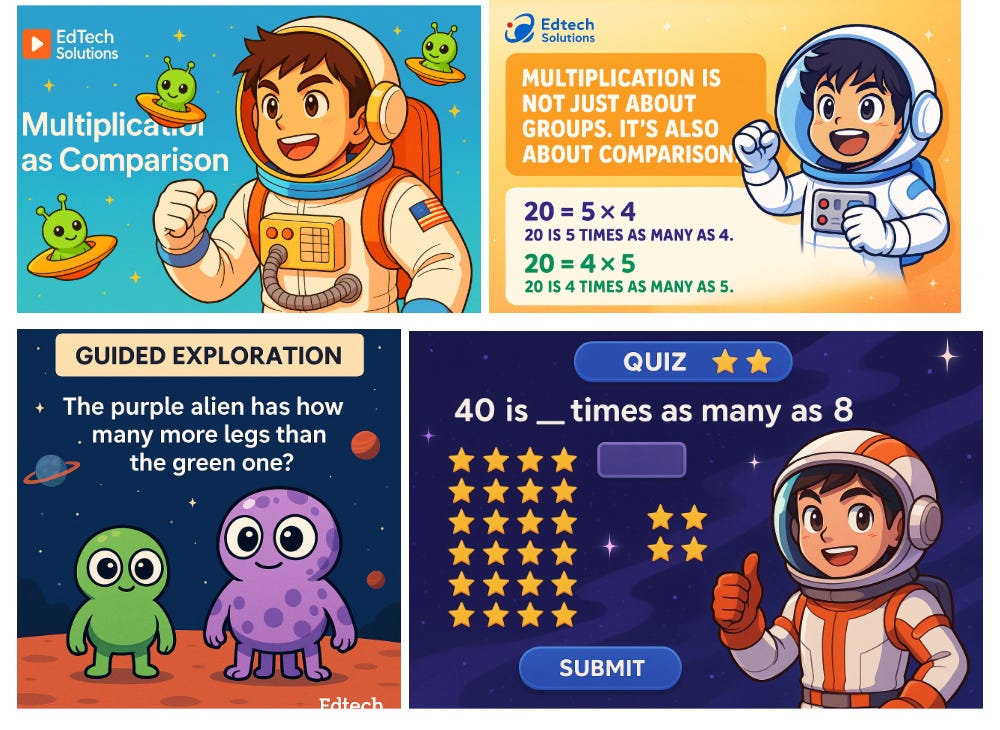
Meet Edtech Solutions, a hypothetical mid-size company that creates math learning tools and educational content for 3rd and 4th graders, including lessons, assessments, and learning videos. They have an existing content library, aligned to Common Core standards, and are beginning to use AI to generate questions, explanations and feedback for students.
Like many Edtech companies, they’re facing several challenges:
Expanding into new state markets without expensive re-alignment projects
Evaluating the level and pedagogical appropriateness of their AI-generated content without large teams of domain experts
Determining which frontier AI model (e.g., Claude, GPT-4, Gemini) produces the best educational content for their needs
Integrating smoothly with schools already using established curricula
Here’s how the Learning Commons tool suite helps them solve each of these problems:
Use Case 1: Expanding to New State Markets
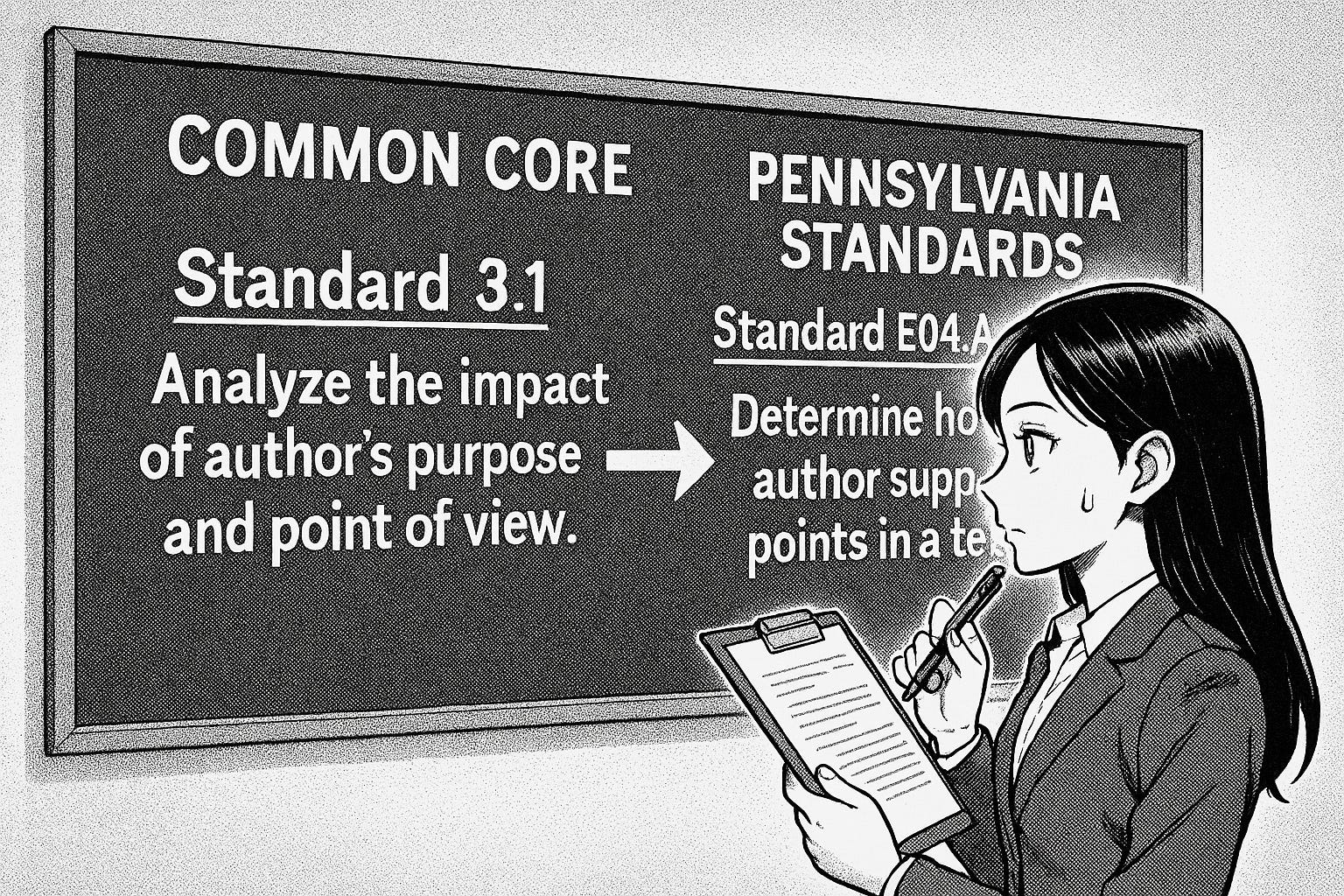
The Challenge: Edtech Solutions has built Astro Math, a 3rd/4th grade math product aligned to Common Core State Standards. Now they want to sell into a wide variety of states, each of which have their own standards with varying relations to the common core. The manual process of crosswalking content to new standards is expensive—often requiring third-party consultants—and time-consuming.
The Solution: Using Learning Commons’ Knowledge Graph and its set of underlying ‘learning components’, edtech companies can more easily crosswalk their Common Core-aligned content to specific state academic standards. The Knowledge Graph contains machine-readable relationships between Common Core, individual state academic standards, and underlying learning components that bridge between different standards frameworks or highlight differences between frameworks.
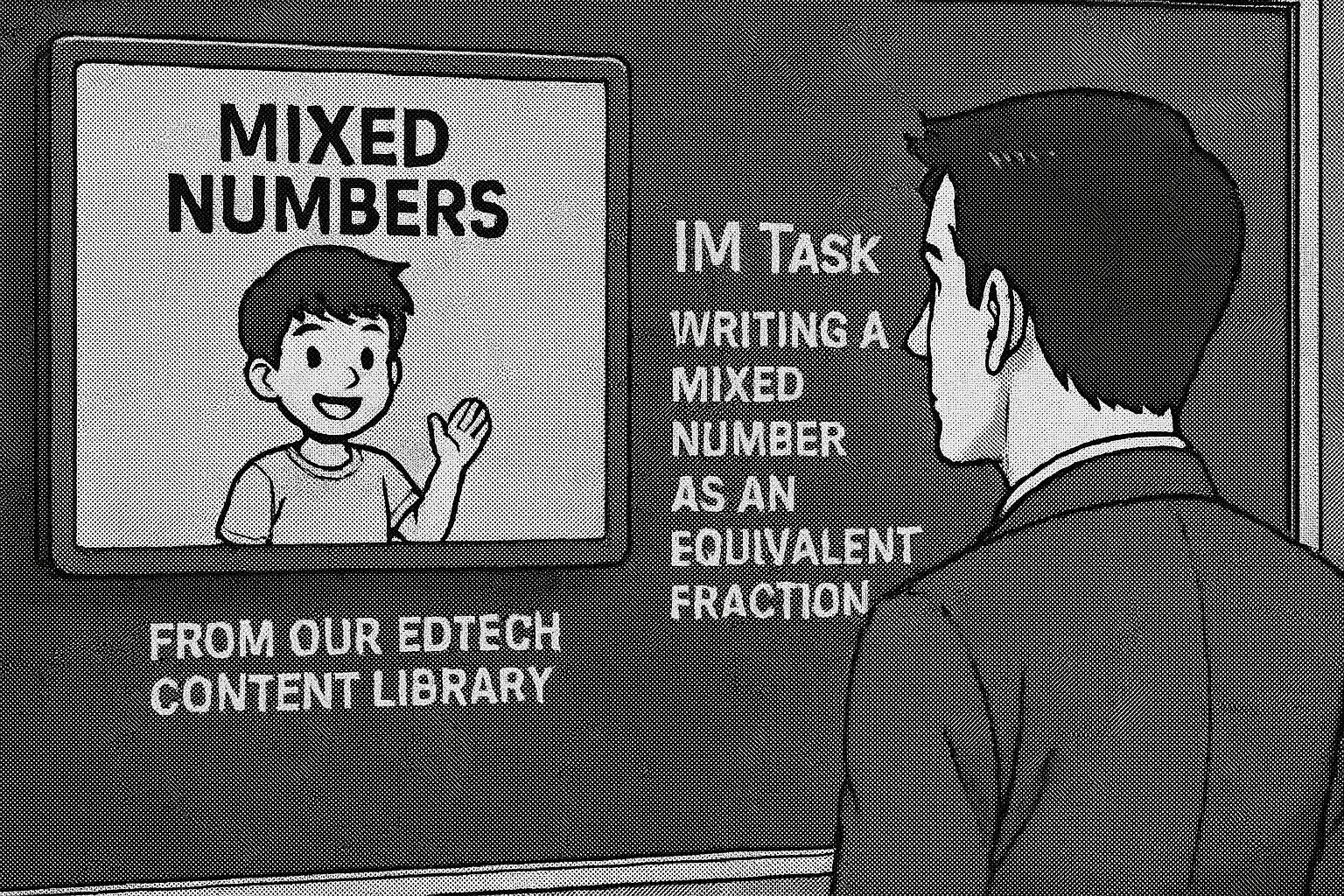
Edtech Solutions can take their Astro Math unit, created for CCSS.Math.Content.4.OA.A.1, and quickly align it to a wide variety of state academic standards and to the relative Illustrative Math content.
The Value: What once took months and significant consulting fees now happens in a fraction of the time. Edtech can rapidly enter new state markets, respond faster to RFPs, and gain a competitive advantage through speed-to-market.
Use Case 2: Ensuring Age-Appropriateness of Content
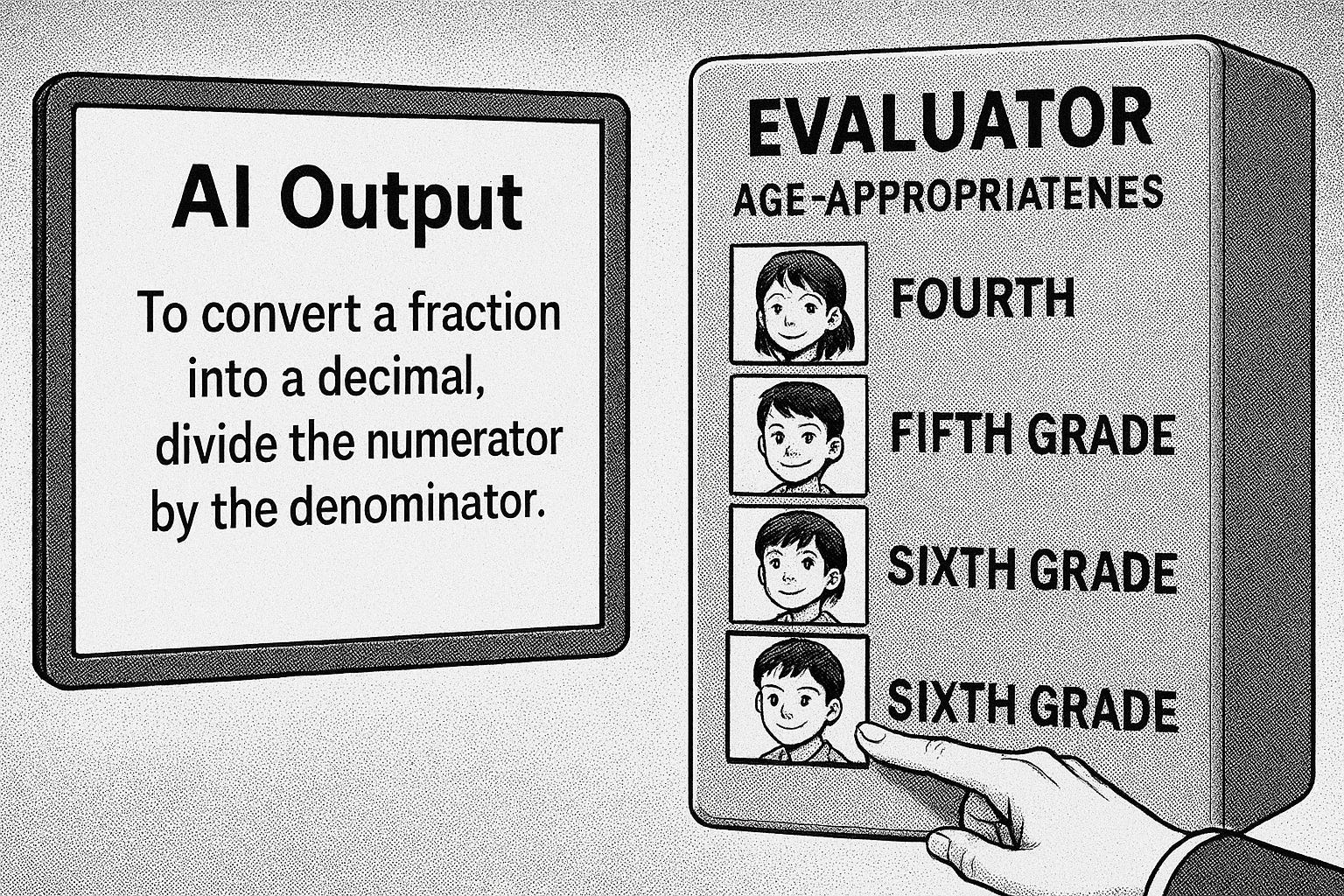
The Challenge: Edtech’s AI generates explanations and feedback for 3rd and 4th graders**, but how do they know if the text complexity is actually appropriate for their target age group? A common problem is AI that writes at an 8th grade reading level when addressing 4th graders.
The Solution: Edtech runs their AI outputs through Learning Commons’ Evaluators—specifically the Sentence Structure, Vocabulary, and Grade-Level Appropriateness evaluators. These tools assess content against evidence-based rubrics created with education experts at Student Achievement Partners and the Achievement Network (ANet).
The Value: Instead of discovering readability issues after launch (or never discovering them at all), Edtech gets diagnostic reports that show “Your 4th grade content is reading at a 7th grade level” or “This 3rd grade text has vocabulary that is exceedingly complex.” They can then adjust their system prompts, parameters, or model choices to deliver more age-appropriate content and proactively recommend strategies and materials to support educators in instruction of more complex content.
Use Case 3: Optimizing Model Selection
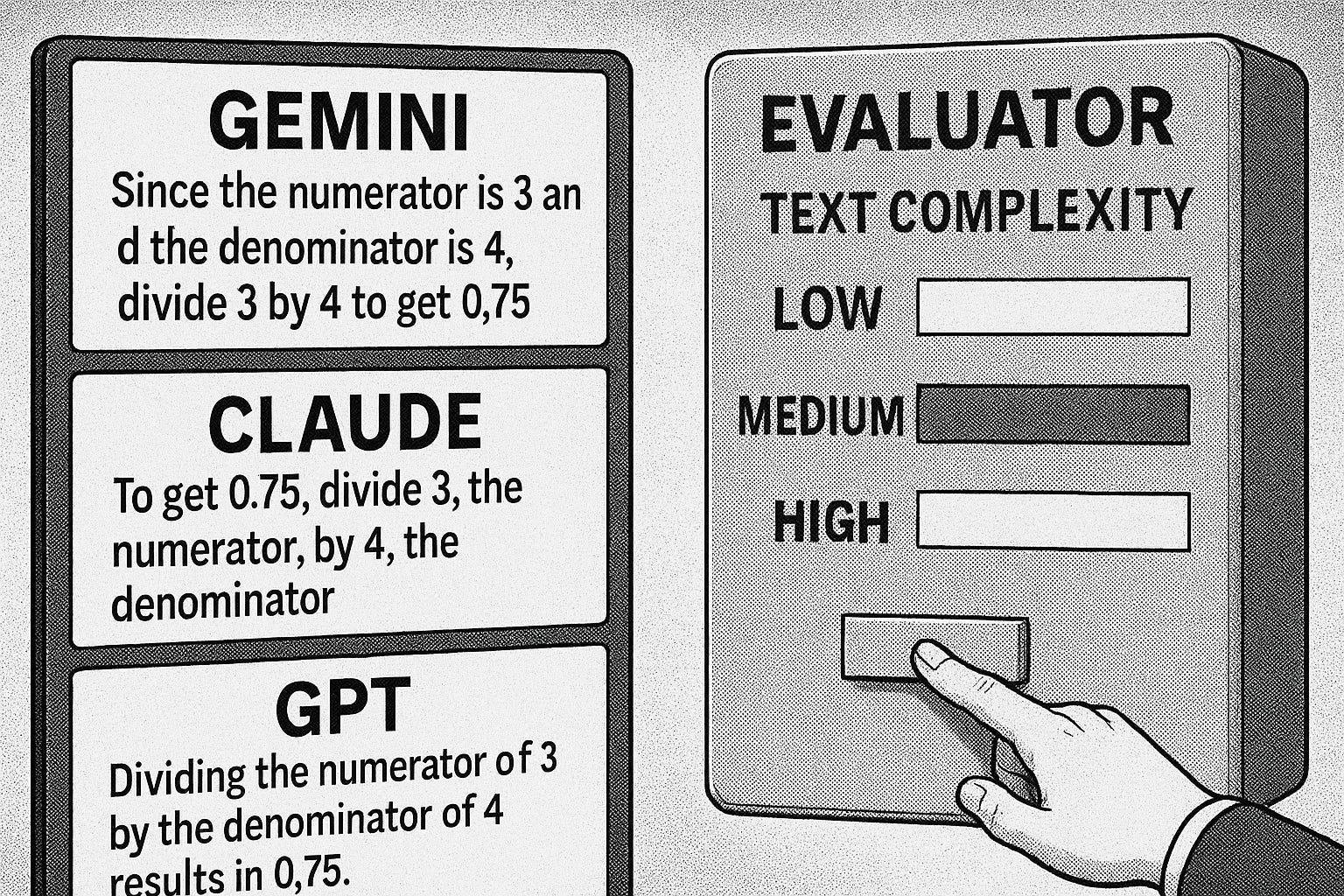
The Challenge: Edtech is deciding between Claude, GPT-4, and Gemini for generating their math explanations. Each model has different costs and capabilities, but which one actually produces the best educational content for 3rd and 4th graders?
The Solution: Edtech generates sample math explanations using each model, then runs all outputs through Learning Commons’ Evaluators. They get objective, rubric-based comparisons showing which model performs best on sentence structure, vocabulary appropriateness, and overall grade-level alignment.
The Value: Rather than making model decisions based on general benchmarks or gut feeling, Edtech makes data-driven choices specifically optimized for educational quality. This might save significant costs if a less expensive model performs just as well on education-specific metrics, or justify premium model costs if the quality difference is measurable.
Use Case 4: Curriculum Alignment for Market Access
The Challenge: Many schools and districts use Illustrative Mathematics, a high-quality, evidence-based curriculum used by over 1 million students nationwide. Edtech’s supplemental content would be much more valuable to these schools if it aligned with the IM scope and sequence, surfacing at exactly the right instructional moments, and if Edtech could align its internal content library to the IM scope, sequence and set of tasks.
The Solution: Using the Knowledge Graph’s curriculum data, Edtech can map their content library to specific Illustrative Mathematics lessons and units. This works bidirectionally—they can also recommend relevant open-source IM content to enrich their own product.
The Value: Edtech becomes instantly more attractive to the substantial market of schools already invested in Illustrative Mathematics. Their supplemental content appears at precisely the right moments in teachers’ existing workflows, dramatically increasing adoption and usage rates.
The upshot: These tools, in aggregate, provide Edtech Solutions with a major set of infrastructural upgrades- which are continuously updated over time- allowing it to focus on its core KPIs- pedagogical outcomes and operational growth, rather than standards and baseline quality assurance of AI outputs.
**A Note on Availability: These examples focus on 3rd and 4th grade content (where evaluators are currently launching), but Learning Commons is rapidly expanding to cover all K-12 grade levels, as well as additional subjects, state academic standards, and more curriculum partners. The Illustrative Math curriculum (content, lessons, etc.) is currently only available through the private beta.
What Powers These Capabilities: A Quick Technical Overview
Two main technical components from Learning Commons enable everything described above:
The Knowledge Graph
The Knowledge Graph is a machine-readable structure that connects curricula, state academic standards, and learning science research. It encodes relationships, dependencies, and skills in a way that makes them accessible to AI systems.
Current datasets include:
Academic Standards: Common Core State Standards plus 18 individual state academic standards (with more states being added continuously). These academic standards are powered by 1EdTech’s CASE Network 2 academic standards repository.
Curriculum: Illustrative Mathematics (with major high-quality educational curricula in other subjects coming soon) (Private Beta only)
Learning Components: Granular, underlying skills that enable mapping between different standards frameworks developed with the Achievement Network (ANet).
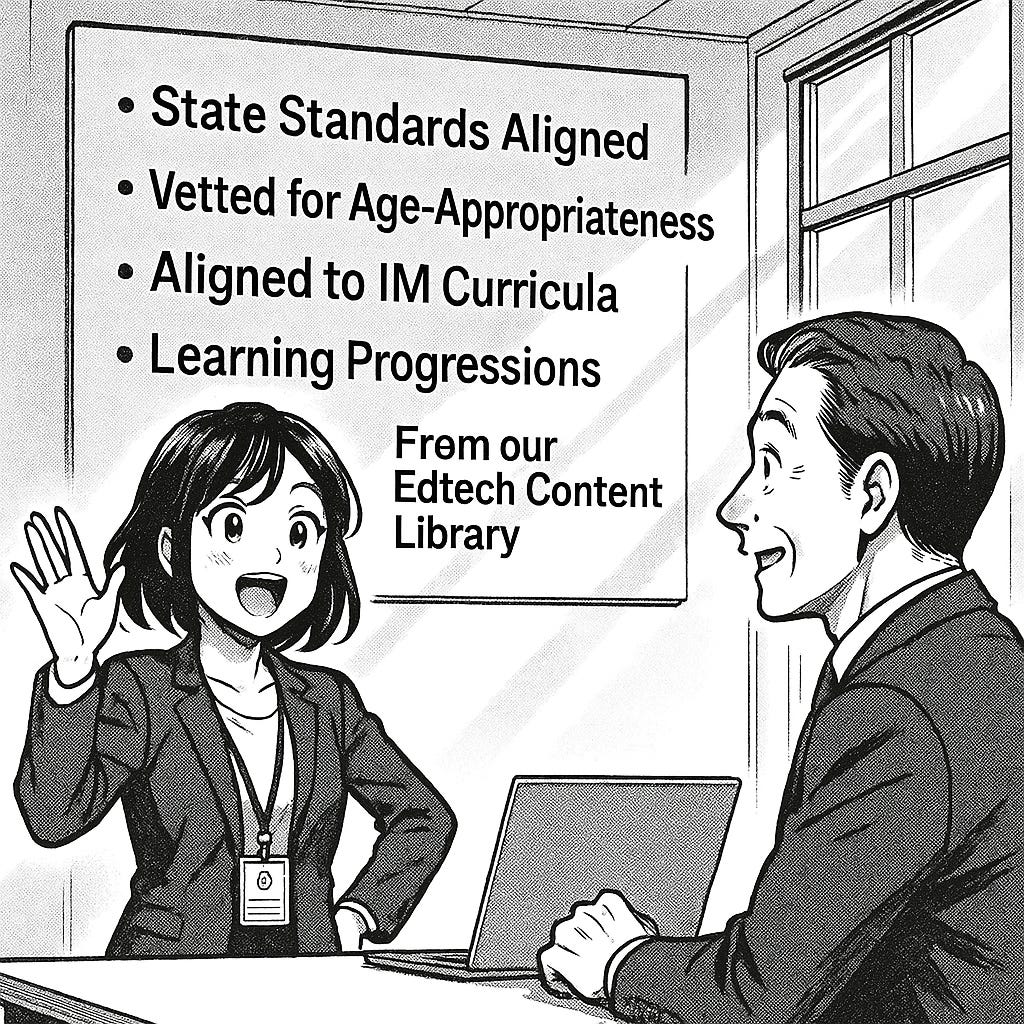
Learning Progressions: Prerequisites, dependencies, and logical instructional sequences across grade levels developed through a partnership with Student Achievement Partners’ Coherence Map for mathematics
How to access it: Two ways: The Knowledge Graph is available through an MCP (Model Context Protocol) server that integrates with Anthropic’s Claude, which allows anyone- developers, educators, or the general public, to try it. For Edtech developers, there are also datasets and technical documentation available for you to host yourself. In the future, API access is also being developed for deeper integration into EdTech products.
Evaluators
Evaluators are evidence-based assessment tools that measure AI-generated content against expert-backed educational rubrics, like the Student Achievement Partners SCASS text complexity rubric. They work on any educational AI content, regardless of how it was created or which model generated it.
Currently available evaluators:
Sentence Structure: Estimates text difficulty based on sentence complexity
Vocabulary: Assesses readability based on word choice and difficulty
Grade-Level Appropriateness: Determines if content matches the intended grade level
In development: Additional evaluators covering pedagogical techniques like growth mindset language, mathematical reasoning approaches, math misconceptions, and other evidence-based teaching practices, all made in collaboration with top educational organizations and non-profits.
Key principle: The Evaluators are content-agnostic. Whether you generated content using the Knowledge Graph, created it with your own proprietary systems, or are auditing existing content, the Evaluators provide objective, rubric-based assessment.
What’s Coming Next
Learning Commons is expanding these capabilities, and they’re actively inviting edtech companies to join as beta partners to help shape what’s next.
Immediate expansion areas:
Grade level coverage: Expanding beyond 3rd/4th grade to cover all K-12 levels
State academic standards: Adding more state academic standards frameworks to support nationwide coverage
Curriculum partners: Integrating more OER curricula alongside Illustrative Mathematics
Additional evaluators: New rubrics covering more pedagogical dimensions and subject areas
Enhanced integration: Making it easier to incorporate these tools directly into EdTech development workflows, including production-ready API access
Why this matters for you:
These are tools that EdTech companies currently pay consultants significant fees to access
You get free access to infrastructure built by education experts and backed by learning science
Early partners help influence the development roadmap
You become part of a mission-driven ecosystem working to improve education for all students
Get Involved
Learning Commons is built on the principle that all educators and developers should have access to high-quality, research-backed infrastructure for building educational AI. This work succeeds only if it creates a lasting impact on how education and technology work together.
They’re actively seeking beta partners who want to:
Test these tools in real EdTech development workflows
Provide feedback to shape future capabilities
Contribute to raising the standard for educational AI
Join a collaborative ecosystem of developers, researchers, and educators
Interested in Joining Learning Commons’ Beta Partner Community?
Learning Commons is the new name for the Chan Zuckerberg Initiative’s long-standing work and investment in education technology. Their stated mission is “to bring learning science into the tools used every day by teachers and students, ensuring that technology reflects the realities of classrooms and strengthens teaching and learning.”
Support Edtech Insiders
Our goal is to make Edtech Insiders an enduring and sustainable community offering. If you love Edtech Insiders and want to support our work, consider becoming a paid Edtech Insiders+ subscriber for only $15/month. Paid subscriber benefits include:
Early access to all Edtech Insiders events. No more sprinting to sign up for our monthly happy hours, edtech summits, and online conferences.
Access to our exclusive WhatsApp channel to connect with edtech community leaders and discuss the latest trends and news in our space.
Reclaim rostering. Own your integrations. Cut the cost. Show us your current rostering bill, and we’ll show you the savings.
1. Education Department Faces Layoffs in Special Ed Office During Shutdown
The Department of Education is reportedly laying off nearly all personnel in its Office of Special Education and Rehabilitative Services, raising serious concerns over continuity of support for students with disabilities. These cuts stem from budget pressures amid the federal government shutdown.
2. Google Brings the Best AI to University Students in Europe, the Middle East, and Africa, at No Cost
Google is rolling out free access to its advanced AI tools—such as Gemini 2.5 Pro, Deep Research, NotebookLM, and Veo 3—for university students across EMEA to support learning and research. The program is funded for 12 months with no cost to eligible institutions or students.
OpenAI’s new video-generation app Sora reached 627,000 iOS downloads within its first week—outpacing ChatGPT’s initial iOS launch numbers. It also crossed the 1 million download mark in under five days, despite being invite-only.
4. What California’s New AI & Social Media Laws Mean for Big Tech
California has passed several new laws requiring social media platforms to display warning labels for minors and compelling AI developers to disclose safety protocols, increasing regulatory burdens on Big Tech firms. These measures also mandate age verification, content attribution, and transparency for generative AI, potentially reshaping how giants like Meta and Google operate.
5. The Godfather of AI Warns That Cuts to Universities Will Cost the U.S. Its AI Edge Over China
AI pioneer Geoffrey Hinton cautioned that although the U.S. currently leads China in artificial intelligence, reductions in funding for basic research and top universities could erode that advantage.
This edition of the Edtech Insiders Newsletter is sponsored byTuck Advisors.
Since 2017, Tuck Advisors has been a trusted name in Education M&A. Run by serial entrepreneurs with over 30 years of experience in founding, investing in, and selling companies, you deserve M&A advisors who work as hard as you do.
Not all LOIs are the same. Use our free Deal Value Calculator to estimate the relative expected value of your LOIs.
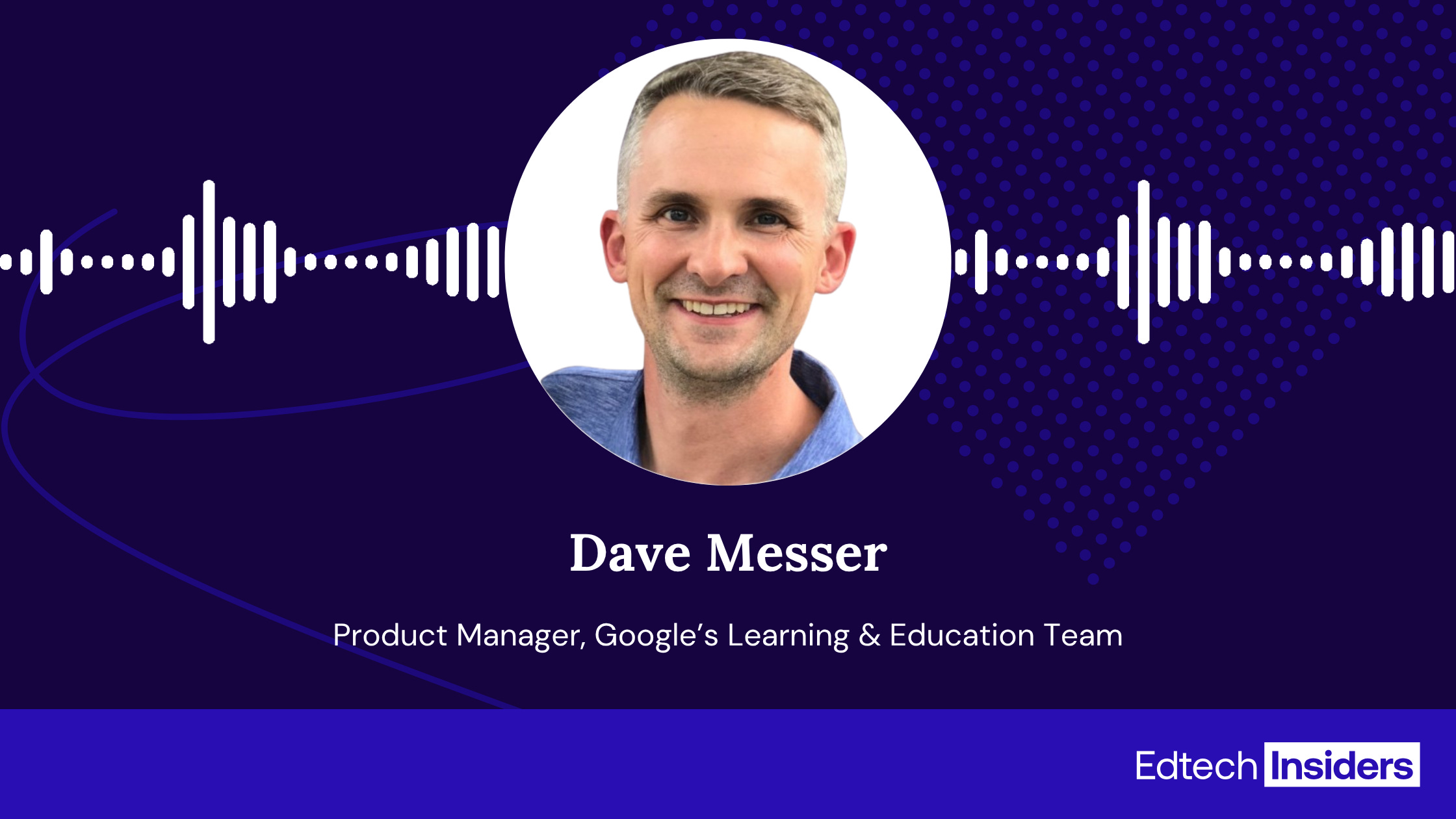
Google’s Vision of a Personal Tutor for Every Student: Dave Messer on Guided Learning
We recently had Dave Messeron The Edtech Insiders Podcast! Dave is a Product Manager on Google’s Learning & Education team, and leads product for emerging learning initiatives, including Learning Labs and Gemini. A former teacher, he works with experts and the education community to build products that target real-world challenges for educators and students.
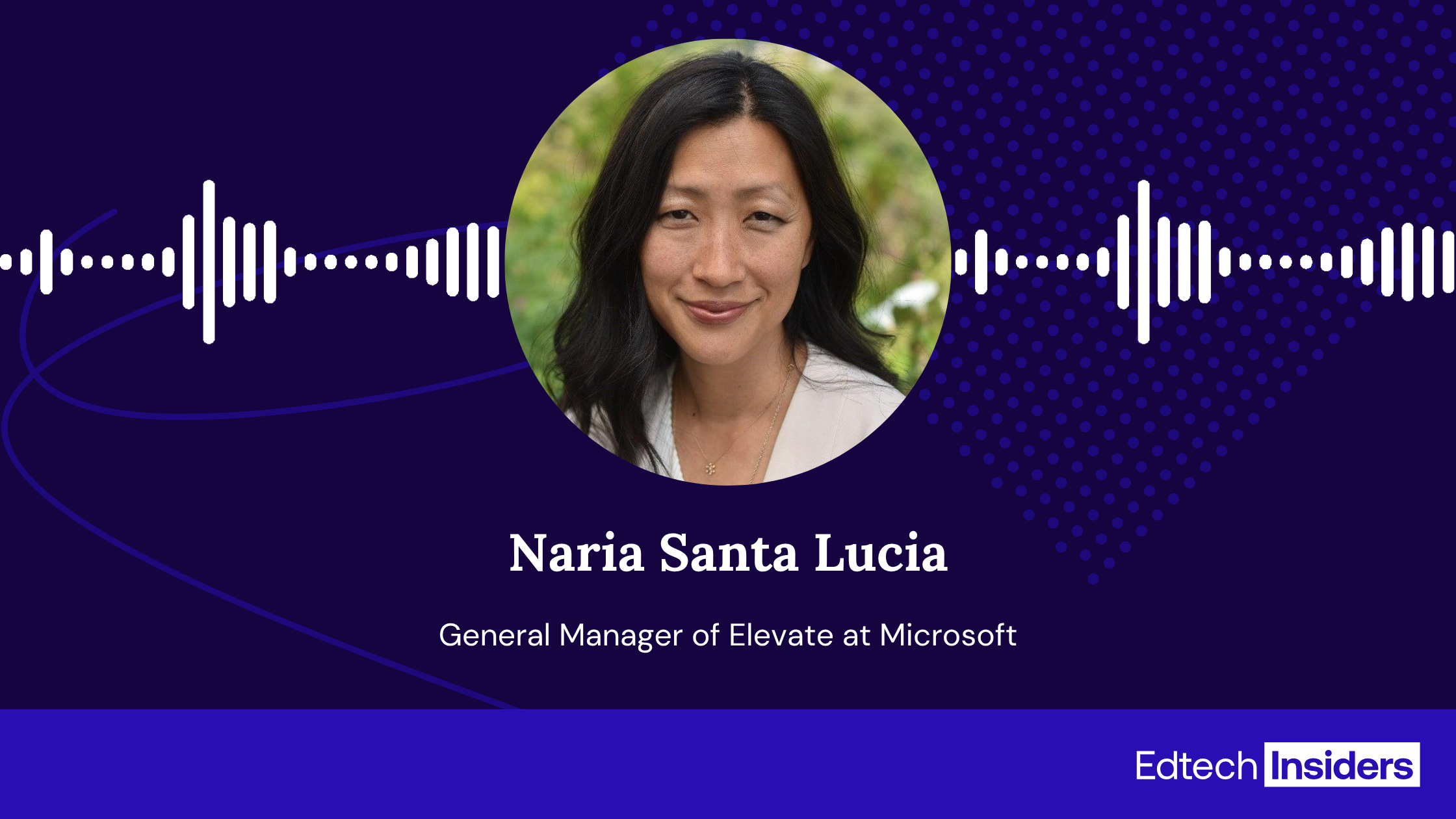
Microsoft Elevate and the Rise of Credentialed AI Talent Worldwide with Naria Santa Lucia
We also had Naria Santa Lucia on The Edtech Insiders Podcast in recent weeks! Naria is the General Manager of Elevate at Microsoft, where she leads global education, workforce, and skilling programs that have already reached over 100 million learners. With 20+ years of experience across corporate, nonprofit, and international organizations, she has partnered with the UN, World Bank, and Ministries of Education worldwide to advance AI, cybersecurity, and sustainability skills.
5 Things You’ll Learn in This Episode:
Why Microsoft calls this a once-in-a-generation workforce moment
How Elevate combines global reach with local trust
Which AI and human skills will define the future of work
Why credentials are central to equity and career pathways
How public-private partnerships drive scale and impact
The CZI collaboration on evaluators for age-appropriate content fills a real gap. The crosswalking use case for state standards is particularly clever.
This fits neatly alongside Anthropic's broader education push. They've since built a full free academy on Skilljar with courses specifically for educators, students, and nonprofits https://reading.sh/anthropic-is-giving-away-13-free-ai-courses-with-certificates-94e2c08623e2 plus developer courses on MCP and the Claude API. They're clearly investing in education from multiple angles now.
The Knowledge Graph concept for standards alignment is smart. Do you know if they're planning to expand beyond math?







The CZI collaboration on evaluators for age-appropriate content fills a real gap. The crosswalking use case for state standards is particularly clever.
This fits neatly alongside Anthropic's broader education push. They've since built a full free academy on Skilljar with courses specifically for educators, students, and nonprofits https://reading.sh/anthropic-is-giving-away-13-free-ai-courses-with-certificates-94e2c08623e2 plus developer courses on MCP and the Claude API. They're clearly investing in education from multiple angles now.
The Knowledge Graph concept for standards alignment is smart. Do you know if they're planning to expand beyond math?