


A Conversation with Lin-Manuel Miranda on Arts Education, Teaching, and the Power of Creativity
By: Alex Sarlin
At a Teach For America gathering in Las Vegas, we sat down with Lin-Manuel Miranda—creator of Hamilton and In the Heights, and the songwriter behind Moana and Encanto—for a conversation about education, creativity, and the power of teachers to change lives. This was a particularly personal conversation: Alex and Lin have known each other since kindergarten at Hunter College Elementary School in New York.
We talked about the teachers who gave Lin a creative path, his years teaching seventh-grade English while working on In the Heights, and how the Hamilton Education Program (EduHam) has brought primary-source history and student creativity together. We also explored arts education, memorization, New York, collaboration, and what it means to encourage young people to make something the world has never seen before.
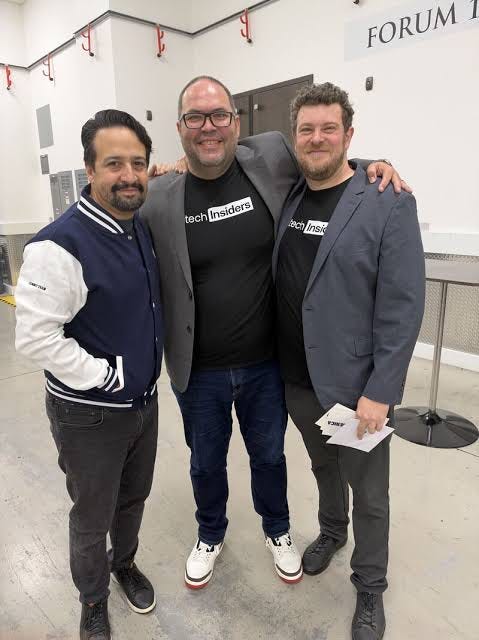
Here’s our conversation. This conversation has been edited for length and clarity.
The Teachers Who Changed Lin-Manuel Miranda’s Life
Alex Sarlin: We just saw a video about the Hamilton Education Program, EduHam, which recently hit its ten-year, one-million-student milestone. We’ll come back to that, but I want to begin with you as a student. You’ve thanked many teachers for shaping your arts education and your life, and you’ve said that arts education saved your life. What did those teachers mean to you?
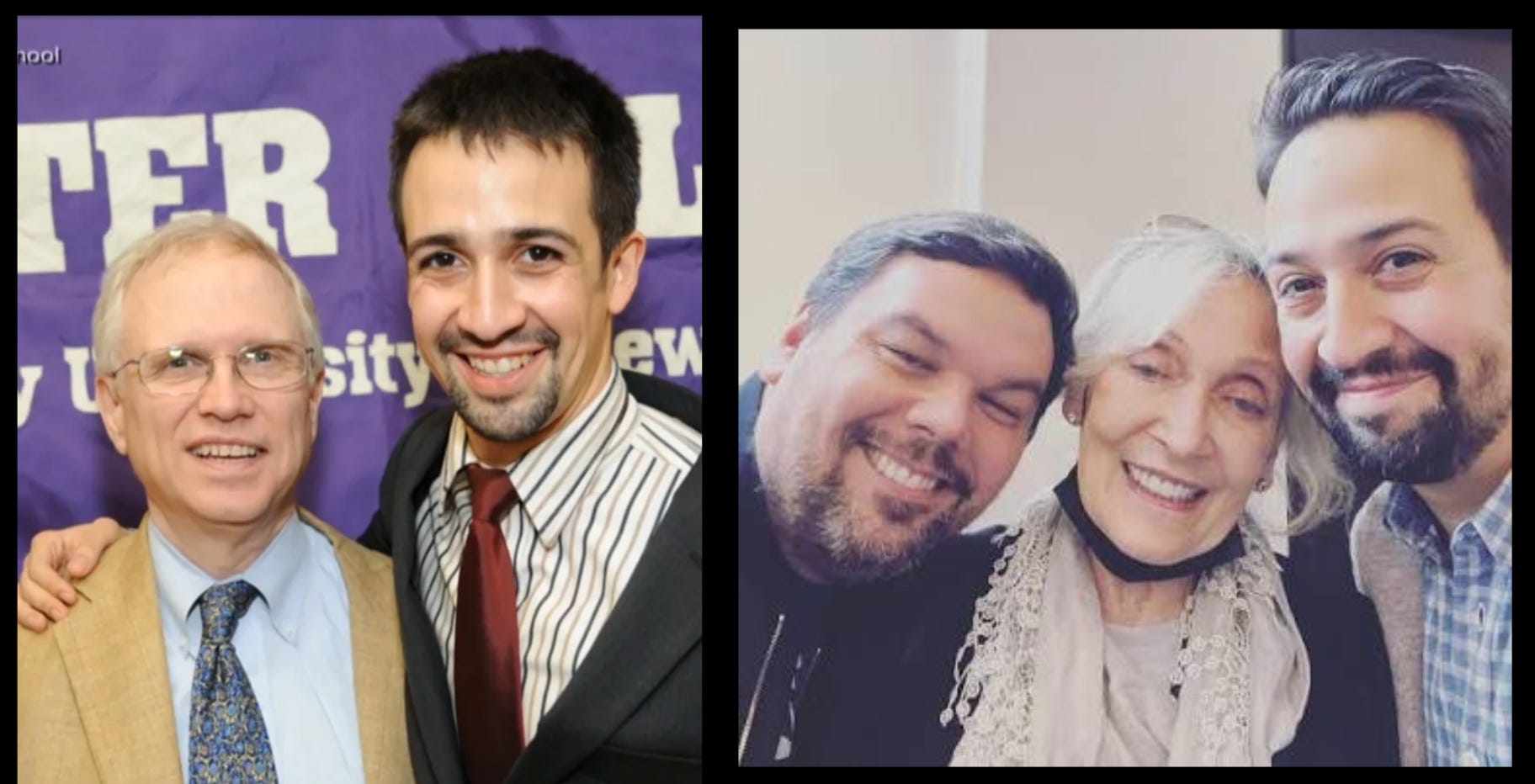
Lin-Manuel Miranda: Dr. Rembert Herbert was my eighth-grade English teacher. I wrote a personal literary essay about Stephen King’s It, as one does in eighth grade. And he wrote on my paper, I’ll never forget it, he wrote, “This is a fine, well argued paper. It confirms what I have been feeling for some time now, that you have been hibernating in the back of my class, emerging only occasionally when the subject interests you.” “It’s a new semester, almost spring. Join us.” And it was a kick in the pants, but it’s true. Any time there was a creative project, I jumped all the way in. Any time it was a little more prosaic, I retreated. He’s the one who encouraged me to start writing plays for Brick Prison, which was the student-written theater club at my high school, and I am a playwright because of that man.
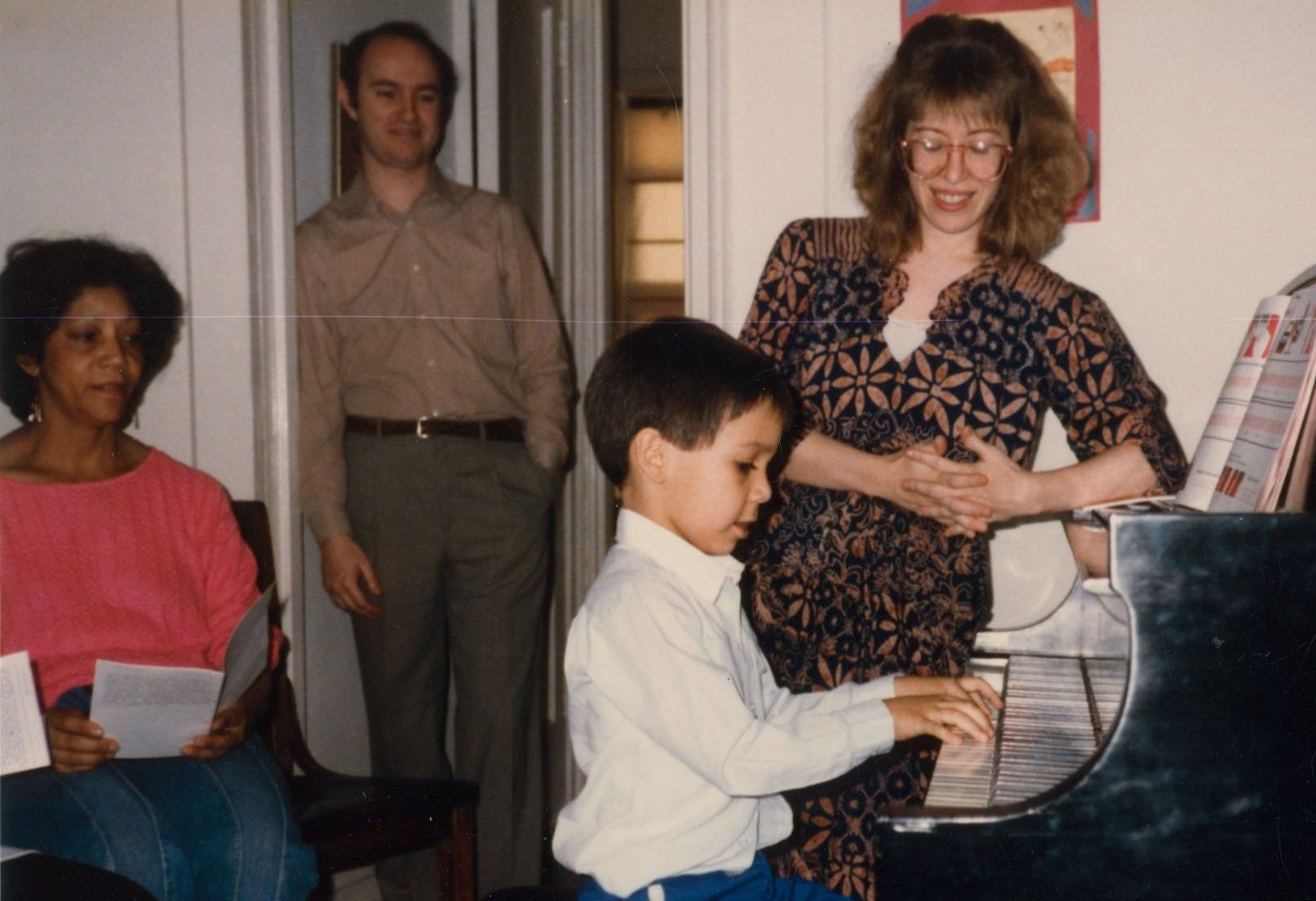
Our elementary school teacher, Ms. Barbara Ames, is a living legend. I keep meeting people whose lives were changed by Barbara Ames. You have to understand, Alex Sarlin and I have known each other since kindergarten. We were in the same class at Hunter College Elementary School. And Ms. Ames, with the help of Robert Sherman, our shop teacher, and his wife, Janet Savage, who was our choreographer, would mount a play starring all the sixth graders. They started this program when we were in kindergarten. Yep. By the time we got to sixth grade, they ran out of age-appropriate musicals for sixth graders. So we did 20-minute versions of the previous six years’ worth of shows. A lethal dosage of musical theater at a very young age. I will read my resume. I don’t remember who all you played. I was Conrad Birdie, I was Captain Hook, I was Bernardo in West Side Story, I was a backup in The Wiz. I was a farmer, and I was a son in Fiddler on the Roof.
Lin-Manuel Miranda: But Conrad Birdie was the role that changed my life.
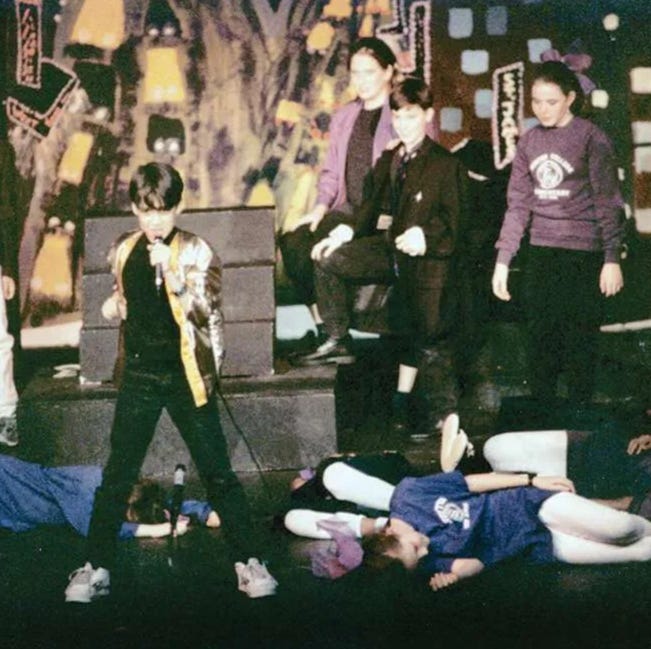
Lin-Manuel Miranda: My grandmother made that gold lamé jacket I am wearing. That role really changed my life, because when you are that short, as you can see, everyone else is towering over me. But you’re playing Conrad Birdie. Everyone has to faint and scream when you sing And so the entire grade is like, “Oh, Conrad!” And I remember thinking, “Why would anyone do anything else for a living— but this?” This is-- I am still, even now, making jokes about The House on Mango Street. I am chasing the Conrad birdie high. It was the greatest moment of my life.
From Student to Teacher: Writing In the Heights While Teaching English
Ben Kornell: You came back to that same school as an educator. Many people don’t know that while you were writing In the Heights, you were teaching during the day. A lot of teachers have side hustles, but that was a pretty good one.
Lin-Manuel Miranda: Well, a side hustle implies you’re making some kind of income! In that case, it was the opposite of a side hustle. Teaching was the side hustle, really. Ah. But no, again, I was a senior. I remember I went to Wesleyan University. I came out with the most lucrative degree, is a degree in theater. And I called Dr. Herbert, my eighth grade teacher, and said, “Are there substitute positions available at our high school?” And he said, “I’ll do you one better. We have an opening in the English department.” And so I taught seventh grade English. Um.
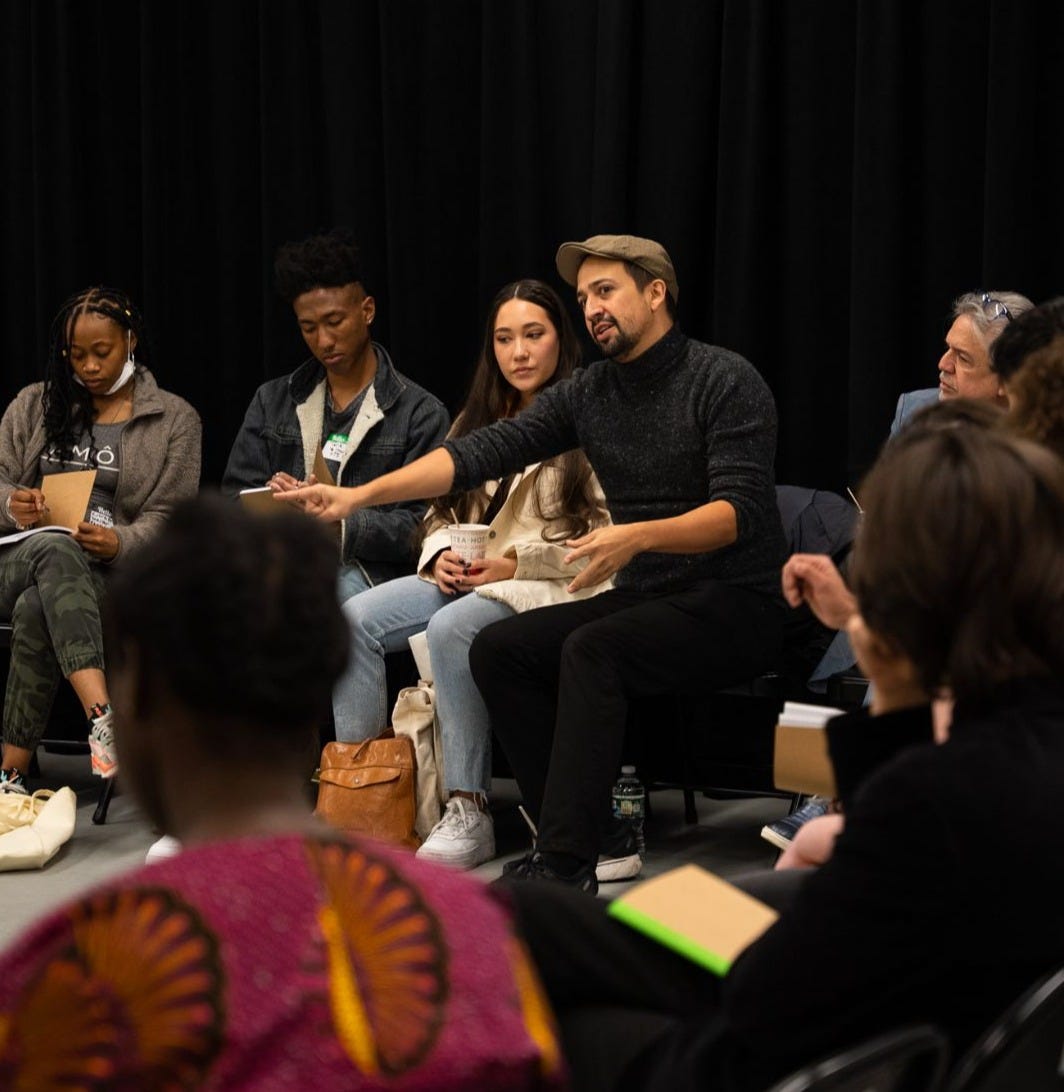
Lin-Manuel Miranda: Things Fall Apart. Of Mice and Men. House on mothaf**ing Mango Street! (audience laughter and applause) You’re familiar with the curriculum. That doesn’t kill in any other room but this one. But it was a great job, and I loved it so much. And then basically, I taught seventh grade English, and then I was a professional substitute teacher basically until In the Heights opened. And you learn... I mean, that sketch where I played a substitute teacher on Saturday Night Live, I didn’t look quite like that. But you’ve gotta keep their interest. I don’t know if you remember our favorite substitute teacher at Hunter, Mr. Wallace.
Mr. Wallace was the greatest, ‘cause sometimes he’d come in and you knew he didn’t know what he was teaching, but what he was brilliant at was playing devil’s advocate.
He would just sort of present the thing and then just start saying the opposite was true. And it would... Like, instead of thinking we’re gonna have an easy class, you’d be like, “What? Wait, that’s not... Mr. Wallace, that’s not true.” “Oh, yeah?” And suddenly you’re having this really intense discussion, and you realize Mr. Wallace has tricked you into learning on a day where the teacher is not here. And he was a legend in our school. And once I had the temerity to raise my hand and say, “Mr. Wallace, you’re just playing devil’s advocate.” And he said, “Who told you that? I am the devil.” But he was a Hunter, Hunter legend. And it takes a really specific skill set to actually teach a class when you’re dropping in for the day, and it was something I learned and served me well over the course of my career.
What Great Teachers Do—and How EduHam Was Born
Alex Sarlin: So this is a room full of people who have spent their careers trying to get the best out of kids, even kids who are counted out of the system. You were somebody in the back of the classroom writing your own things, doing your own stuff, and teachers had to pull you out. Tell us about what it meant for teachers to unlock a student’s potential. Like, we have so many people in this room who have their student who they’ve unlocked. What did it mean to be unlocked, and what does it mean to you for teachers to create arts, especially within the arts, of trajectory for students?
Lin-Manuel Miranda: Yeah. I think when I started teaching, I went in with a great deal of trepidation and a lot of misconceptions on what a great teacher was. I remember thinking, “Well, I’m a performer, so this will come naturally. I can hold an audience. I have a degree in theater. I can hold my students’ attention.” And you learn very quickly, one, it’s exhausting to perform for your class, and two, the best teachers hardly say anything. The best teachers get the class talking to each other. And you learn very quickly and pedagogically that, like, keeping the ball in the air is your job as a teacher. It’s getting that great back and forth going. It’s getting the learning happening among the students. If it’s going off the rails, you tap the ball back into the air, and you keep them talking to each other, and that’s where all the greatest learning happens.
And so I remember learning, like, the crash course in that as a teacher, realizing my degree in theater did not help me at all. Or my performing didn’t help me at all. It really was about getting all of the kids into the room. And for me, the Hamilton Education Program is, like, the greatest expression of that. When Hamilton opened Off-Broadway at the Public, the thing we learned very quickly was... And it’s something you can’t buy, it just, it happens or it doesn’t. Everyone who left the show told somebody else, “You have to see the show.” And we realized that was happening very quickly, and we realized if students can’t get in to see what covers about a semester of AP US history- it will be an enormous wasted moment. And so between Off-Broadway and Broadway, we were plotting with Gilder Lehrman and funders to create EduHam and make dedicated performances for students, but not just, “Come see the show. Hope your life changed. If not, no big deal.”
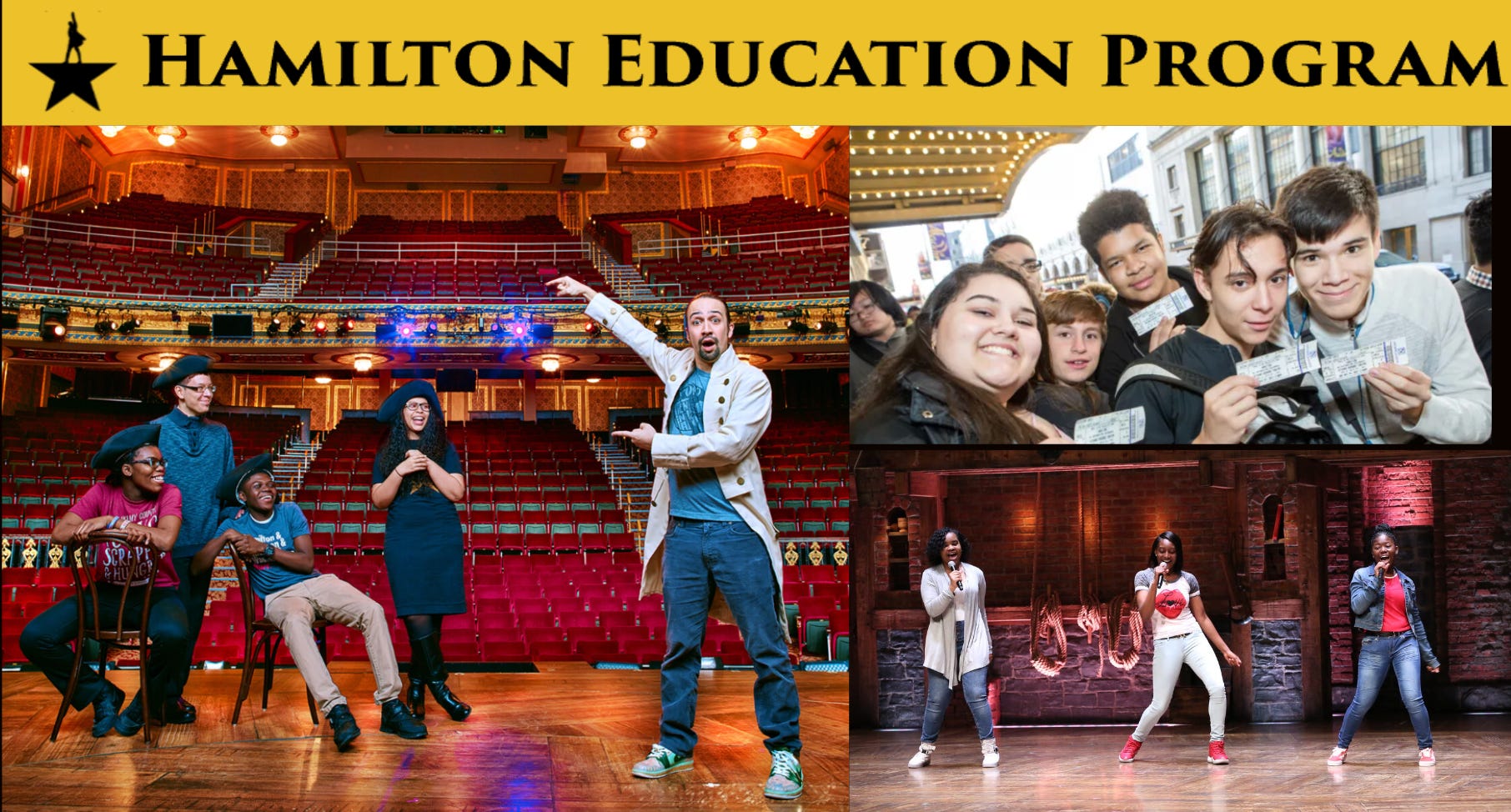
We wanted to create a curriculum that would prepare them for what Hamilton was, which again, it took me six years to write this show. I was in the English department. I was in the theater department. I was not a history student or an exemplary history student. I think the magic sauce of why people love Hamilton is they’re feeling me learning this just before I’m writing the song It’s, “Can you believe that this happened?” There’s kind of an undercurrent of, “Can you believe this is how the story played out?”
Because that’s my feeling reading the story, synthesizing it, and figuring out how to make it the best musical you could spend your, your hard-earned money seeing. And I think that energy is what powers it, and it’s so extraordinary to watch these students work with primary sources, which is what I worked with when I was writing the show, reading Hamilton’s writings, reading Burr’s writings, reading everybody’s writings, and then kind of figuring out where your story is within that, and then making their own stuff. So they’re engaged with it in a different way because they’ve now had the assignment, “I’ve gotta take these primary sources and I’m gonna write about whichever historical character,” and really I think it’s the greatest legacy Hamilton has: this educational program.
Lin-Manuel Miranda: Go pay us a visit today. But yeah, it’s extraordinary. And now that the program’s been running over 10 years, I keep meeting kids who say, “I was an EduHam kid. I performed on the stage at the Rodgers,” or, “I performed at my school.” Yeah. And it’s, it’s amazing to watch that first wave of the kids now go into things like education and Teach For America.
Why Arts Education Matters More Than Ever
Ben Kornell: So Lin, part of that magic is that we all see ourselves in your storytelling. The students see themselves in the history in ways that they never had before, and part of Hamilton, part of Moana, part of Encanto is helping all of us in our search. But also a lot of us are grappling this weekend on the realities of school. There’s budget cuts, there’s state tests, and we’re seeing hard trade-offs between math, reading, and writing, and arts education. What’s the case that you would make to this room of incredible educators around the importance and value of art, and how would you encourage them or suggest that they pursue that in their school?
Lin-Manuel Miranda: Absolutely. I think that a lot of what makes arts education so important, and also honestly, like funding for a theater program at your school and arts programs at your school is the same that is the funding for your sports programs. You learn about collaboration. You learn to make something that you could not make alone.
I talk about this a lot, but if I’m running a rehearsal in New York, I am the most fun place to be in New York. And that is because we had a student-run theater program. You could not hire, fire, or pay your fellow students. And if you had a reputation for being tough or being annoying, they’d go try out for the basketball team, and you’d lose your best dancers, and they wouldn’t audition for the show. And so you learn practically, like, I actually need to make this the most fun place to be, and I need to learn to lead in a spirit of collaboration, and the best idea in the room wins because, one, that attracts the best performers to my play, and two, there’s an intangible from that kind of learning, from learning to work together. And in an era where we all self-silo on our screens, I think collaboration is more important than ever before, and arts education does that.
How Music Makes Learning Stick
Alex Sarlin: You mentioned Encanto. For millions of families, you’re the voice of childhood: Moana, Encanto, the live-action Moana, Vivo. These are songs that kids memorize before they can read. My family sings them in the car all the time.
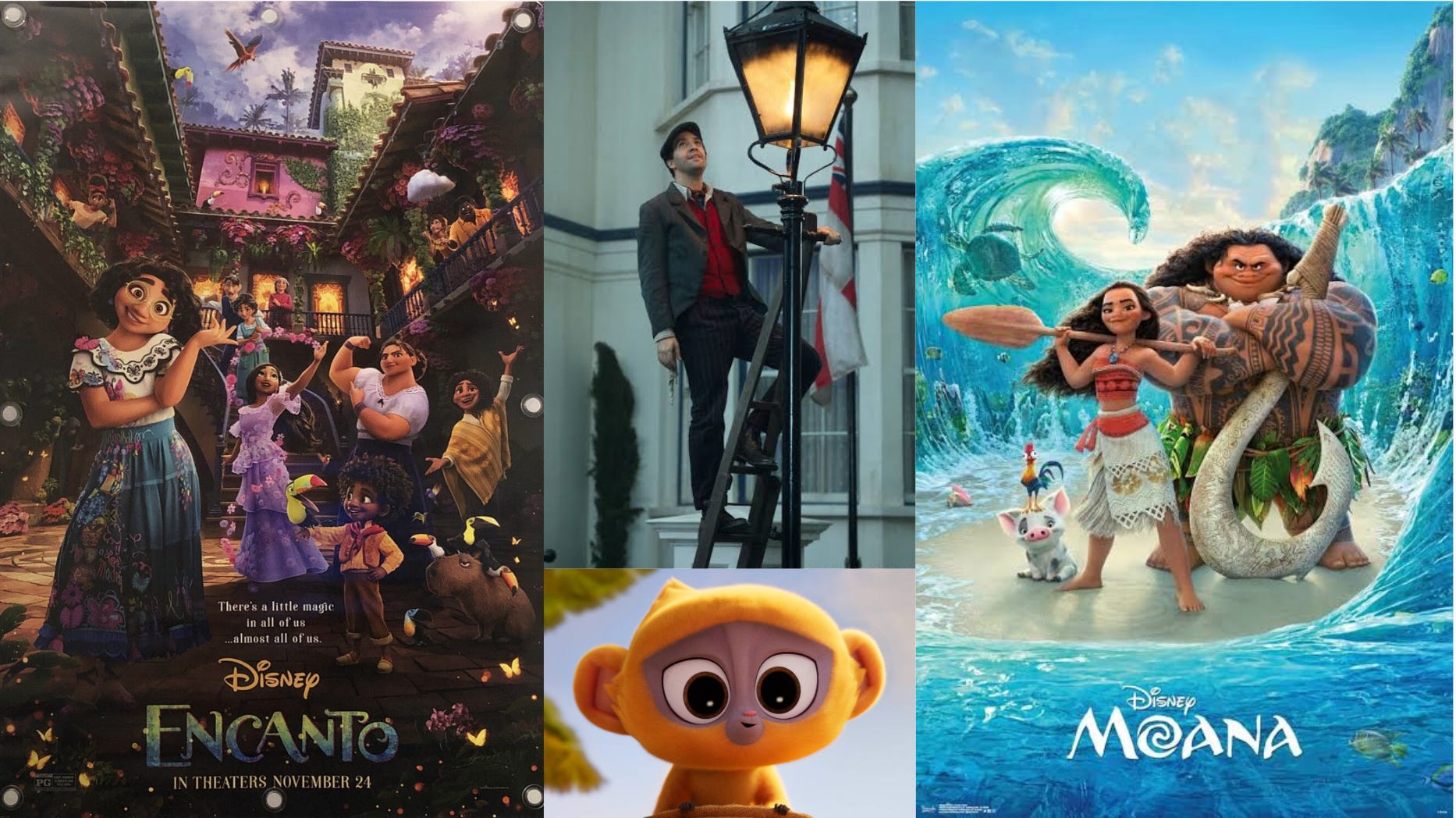
Alex Sarlin: There he is. You’re the voice of childhood, right? Moana, Encanto, the live action Moana, Vivo. These are songs that kids memorize before they can read. My family sings them in the car all the time. I’m sure others are feeling the same
Ben Kornell: way. Actually, Lin, what songs do you sing in the car with your kids? Do you sing your own songs?
Lin-Manuel Miranda: My kids are the beta testers. Ooh. Yeah. Like, my kids were running around the house singing “We Don’t Talk About Bruno” about two years before your kids.
Lin-Manuel Miranda: And if I catch Frankie singing it to himself— then I know, okay, this can leave the drafts file. So yes, I have, I have like, I have pint-sized beta testers. That’s really my secret.
Alex Sarlin: So tell us about the connection between entertainment, like popular entertainment kids love, and education. How can they overlap?
Lin-Manuel Miranda: Alex, I think you remember, one of the reasons that I think Hamilton is such a big deal for kids, which I never anticipated, I didn’t, I never thought of it as being for kids. I was just trying to write the best show possible. Kids like memorizing stuff.
Alex Sarlin: Yes.
Lin-Manuel Miranda: You and I are 46. Yep. I remember the race to be the first person…
Alex Sarlin: Alabama, Alaska, Arizona, Arkansas…
Lin-Manuel Miranda: Do you want to do “Fifty Nifty United States”? I’ll do it with you right now.
[Lin and Alex briefly sing their way through the fifty states, joined by the audience. Laughter and applause]
Lin-Manuel Miranda: My point is, kids like memorizing stuff. Part of the reason Hamilton is a hit is that there’s so much to learn and memorize. Who can do “Guns and Ships” in class? That’s part of the stickiness of it. But for me, you know, as you well know, just like Little Mermaid like changed the neurons in my brain. That’s right. There was like me before Little Mermaid, and there was me after Little Mermaid. Yep. Just, it’s like a demarcation point— in my cognitive development. Les Mis. And again, like we pride ourselves on knowing every word of everything. I think students crave that, and that lends itself really well to the kind of music I write, because I always With, when it comes to music for the theater, when it comes to music for these films, I’m always just trying to sort of square the music I grew up listening to- Mm Common being like chief among them, with the music I wanna write. You know, I just, I believe music should be in conversation with the music we love listening to. That’s why Little Mermaid changed my life. I couldn’t believe a contemporary calypso number was, like, in the middle of this Disney movie. It just felt, in retrospect, it just feels like a Disney tune, but at the time, it was really radically different from, like, When You Wish Upon a Star. And so that became a part of my ethos, was just like, I wanna write songs that I would wanna hear on the radio.
New York, Identity, and the Stories We Tell
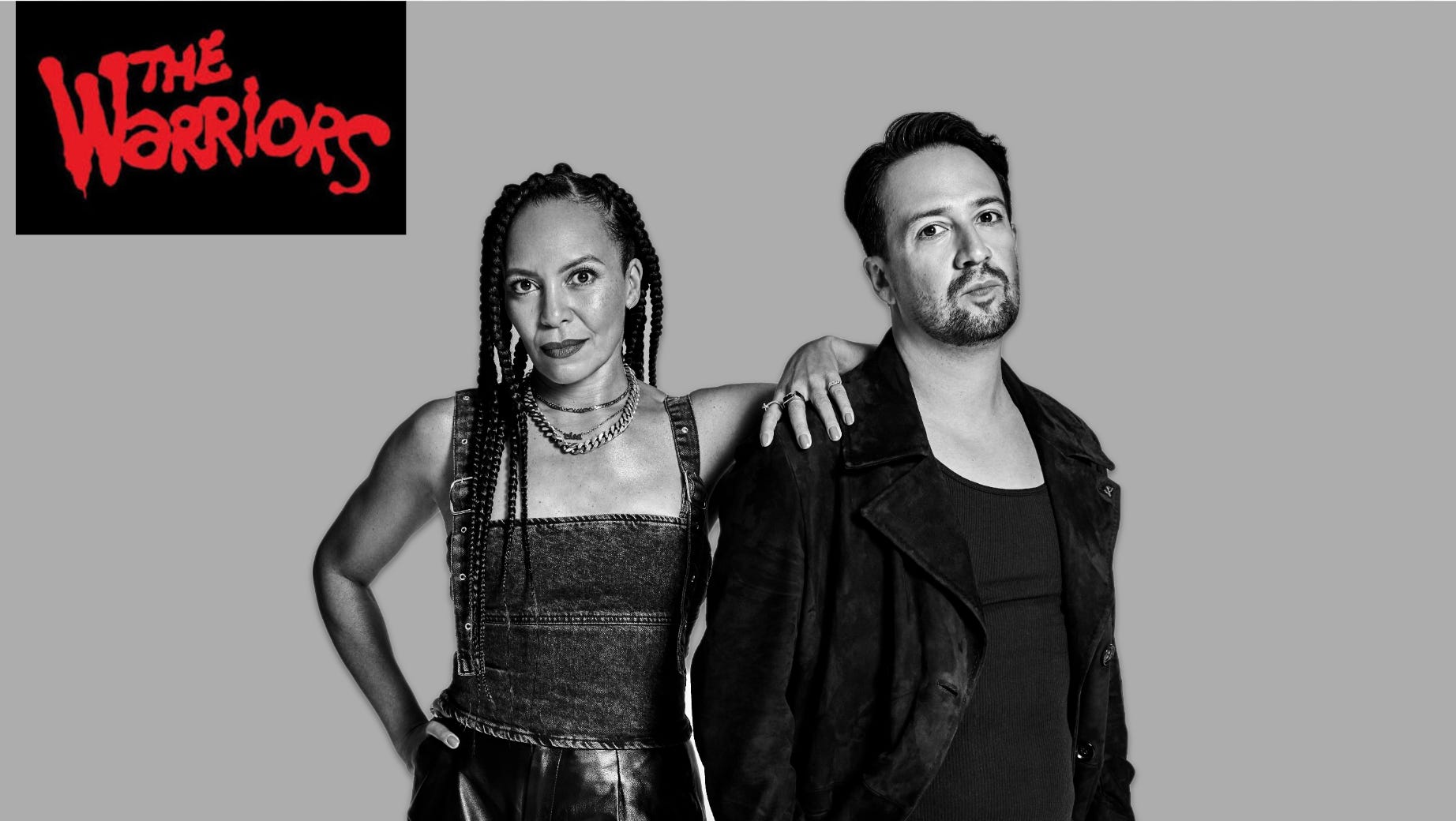
Alex Sarlin: Next spring, your new musical Warriors, co-written with Eisa Davis, will open on Broadway right across the street from Hamilton. I wanna ask you about New York. It’s a through line of so many of your works, Hamilton, New York. So what did New York mean to you, and as an educator, as an artist, and, you know, what can people take away from the places that they’re from, bringing it to their work?
Lin-Manuel Miranda: Yeah, I think I’ve been struggling to make sense of New York all my life.
Lin-Manuel Miranda: And still struggling to... I mean, our school’s a great example of it. I grew up on 200th Street, like, at the top of Manhattan. All right. Inwood, Washington Heights, hello. And when I was six, I got into this public school called Hunter, and suddenly I’m commuting to the Upper East Side, like, the richest ZIP code around.
Lin-Manuel Miranda: And it’s like, the culture shock happened at such a young age that I didn’t even experience it as a culture shock. It was just like this, I went to a different universe for school. I was Lin-Manuel at home, I was Lin at school.All my friends, you and all our friends lived on the Upper West Side. And so I was, even when I was very, very little, navigating different New Yorks. The best evidence, when we were in seventh grade and finally allowed to leave campus to buy lunch, was that a two cheeseburger meal at the McDonald’s on 86th Street was 3.49, and a two cheeseburger meal on 103rd Street was 2.99. Like, okay, got it. The poverty line is 96th Street. And everything’s more expensive in the richer neighborhood where we go to school. And so one, In the Heights was my attempt... It was my first musical. (applause) Thank you.
You know, they say to write what you know, and they say, like, “What’s a place that lends itself well to musical adaptation?” And I don’t know a place that plays more music outdoors ... than Washington Heights and Inwood. You walk down the block, you’ll hear six different kinds of music coming from six different sources, and I thought that’s a fertile musical landscape to write about. With Warriors, the exciting thing is going back in time a little. You know, the movie came out in 1979, the year before I was born, but it’s also a time when so many different kinds of music are emerging from the city, you know? Fania is, like, reinventing salsa. Hip hop is being born in the Bronx, or it’s, like, emerging. It’s, like, uh, nine years old, eight years old. There’s punk and there’s new wave music. And so as the Warriors fight their way, if you’re not familiar with the plot of The Warriors, go rent The Warriors. It’s a great movie. But it’s this gang that’s been falsely accused of, of committing this crime. They have to fight their way from the Bronx all the way down to Coney Island, which is their home turf, and it lets us play in every sort of musical sandbox in every neighborhood. And again, it’s still me getting my head around how many New Yorks can exist inside New York, and it’s just the greatest place in the world. Greatest city in the world.
The Artist’s Call to Action: Create What Doesn’t Yet Exist
Ben Kornell: So many of us here are navigating that code-switching multiple realities that we live in as parents, as teachers, as leaders, and also the context of our world right now really creates a challenge. What’s our call to action? How do we be our best self and inspire the next generation to reach their full potential? And there’s also a lot of conversation about artists and what role they have in the sense-making of this moment. For our educators, for our artists here, what is the call to action that you see in this moment of profound change and social disruption?
Lin-Manuel Miranda: Yeah. Well, listen, what’s the curse? May you live in interesting times.
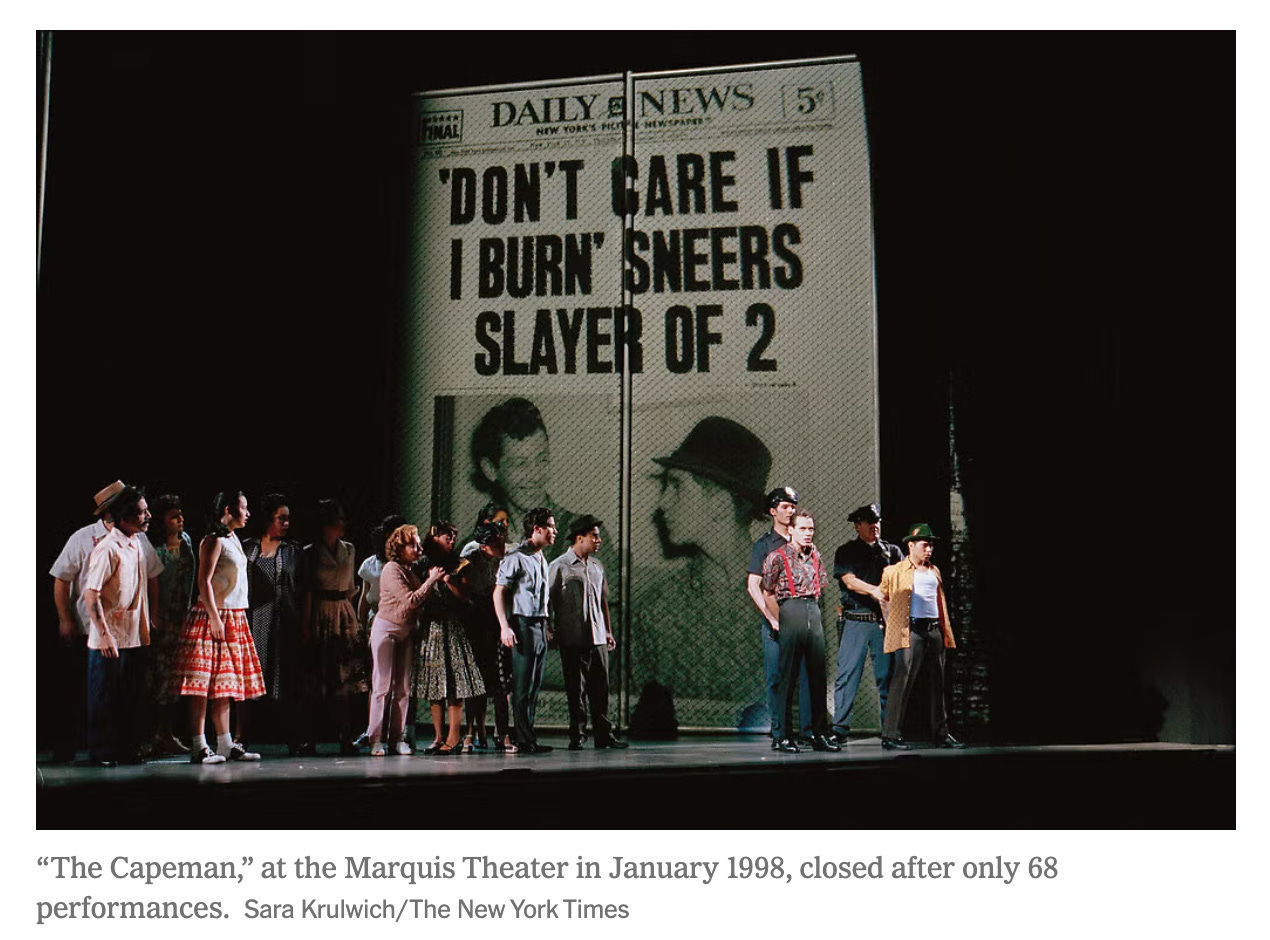
Lin-Manuel Miranda: We live in interesting times, and for me, I think a couple things. First, about the arts and education, it is a blessing that the story that attracted me to write about it, Alexander Hamilton’s story, is also a launching pad for the education of so many kids, or sparks their curiosity, but that’s a by-product. I’ll speak for myself. When I try to write with, like, a message or idea in mind, it sucks. It feels like polemic, it feels like message, it feels like sloganeering. I really believe that an artist’s call to action is to create what only they can create, the story that you haven’t seen yet that needs to exist, that you know is true, that’s your responsibility as an artist. If it can host an educational initiative, that’s gravy, but it’s really about expressing what you know to be true and you haven’t seen represented yet. And I think it’s our charge to, as these young people navigate this world, charge them with that task. What are you seeing in the world? How do you see the world in a way that is different, that takes the scales from our eyes from what we grew up with as educators? I’ll tell you a story. You know, I... When I was a senior at our high school, I directed West Side Story. It was the only... Yeah, it’s a great show. It’s also the only show with Puerto Ricans in it in the— 70 some odd year, in the history of musical theater really, that, like, gets done. And I don’t dance well enough to play Bernardo, and there was another musical that came out our senior year. It was by Paul Simon. It was called The Capeman. It was a beautiful score, and it flopped so hard. It ran 68 performances, and it was also about knife-wielding Puerto Ricans in the 1950s, which is a really over-represented group— in global media. Like, Puerto Ricans are doctors and lawyers, but really in movies we are knife-wielding gang members, in the 1950s specifically. And it really scared the hell out of me, because I was like, it was sort of the, “Hey, no one’s writing your dream show, Lin-Manuel.” No one’s making the thing that you see. No one’s making your dream role. For me, the failure of that show was the kick in the pants to start writing, well, what is your dream role? What is your dream show? What is the thing that you see that doesn’t exist yet? And I think our charge to our kids is, what is the future we don’t see yet, but you do?
Relationships Come Before Results
Alex Sarlin: One of the speakers on stage earlier said that relationships come before results. I love that, in, in education and everywhere, and I think this is really your superpower. You have a lot of superpowers, but you are so good at relationship building. You’ll connect with people in so many aspects of your life. I’d love to hear you talk about what it means to build strong relationships that actually stay over time, especially in the context of education. You know, student to student, teacher to student. I think this is something you are sort of uniquely-- You see it very differently than others.
Lin-Manuel Miranda: I work in an art form that you cannot do alone. I am not a novelist. I’m not even a playwright. I write songs for musicals, and I write songs for movies, and those take hundreds of people. And I think for me, the goal is always, what’s the best idea in the room? And sometimes if I’m working on something, I’ll just bring in a verse and a chorus, and I’ll go, “Am I on the right track?” And someone’s reaction to that might lead to something that inspires the second verse. And also, I find when you find kinship with someone, artistic kinship or a friendly kinship with someone, like, you, you hang on to those people. I was a first-year hire along with Lisa Siegman. Lisa, are you here? Yeah. Hi. Lisa Siegman is now the Dean of Hunter College. Woo! And we’re still friends, but we were first-year hires at Hunter in two thousand two, two thousand three. You know, we still text-
Lin-Manuel Miranda: We still text all the time. And because we have so little time left, I wanna say something about Alex. Like, there are the teachers, there are you wonderful people who do this incredibly noble profession, and you will be remembered by your students for what you’ve done for them for the rest of their lives because I know the names of all the teachers who changed my life. And then there are the teachers in your everyday life, and I have to tell you something about Alex Sarlin over here, and I’m gonna try not to cry while I say it. But Alex would let me come over whenever. And I was so bad at math that I would come to his house, and he would just do math with me. I, I did not pay him for these efforts. But I basically passed high school because of Alex. And also Alex was incredibly generous with his piano. He had this beautiful piano, this beautiful keyboard, and he was an incredibly accomplished musician, and I would come to Alex’s-- I was like, “Alex, I think I’ve invented a new chord.” “I, I’m playing an F sharp. I’m playing a...” Sometimes I would call him. “I’m playing an F sharp. I’m playing an A, and then I’m playing a D sharp.” And then he would tell me the name of the chord. I hadn’t invented any chords. But I basically learned music theory by hanging out with Alex, and most normal teenagers would be like, “Get out of my house.” But Alex was infinitely patient. All my first songs were written at his piano. There are pictures of Dr. Herbert and Ms. Ames, and they changed my life. But you really changed my life, and I love you so much.
Ben Kornell: I’ve got the challenge of wrapping us up after that!
Ben Kornell: Thank you, Lin, for inspiring each of us. We hear in your music our call and our vision. On behalf of this incredible Teach For America family, thank you so much for coming.
Lin-Manuel Miranda: Thank you for what you do.
Thanks for reading! Support our work by becoming a paid subscriber, or email info@edtechinsiders.org to learn more about partnerships and sponsorships.
Top Edtech Headlines
1. Allen Institute for AI launches TutorMoments, a benchmark testing whether AI tutors know when not to help
The Allen Institute for AI (Ai2) has released TutorMoments, a new benchmark evaluating whether AI tutors can balance providing support with encouraging productive struggle. Built from 462 real math tutoring transcripts involving students in grades 2–7, the benchmark tests AI models at more than 1,500 critical instructional moments identified by experienced teachers.
The key finding: AI tutoring from frontier providers is often too helpful. Models frequently provide hints or explanations when students would benefit more from figuring things out themselves. Explicit pedagogical prompting dramatically improves performance, suggesting that effective AI tutoring depends on instructional design, not just model intelligence.
Why it matters: Some solid findings of what we in Edtech have already figured out- that without explicit training, frontier models, even when told to ‘tutor’, don’t yet have enough pedagogy built in.
Explore TutorMoments and its model leaderboard
2. Amira Learning files for a $14 million funding round
AI reading company Amira Learning filed an SEC notice for an offering of up to $14 million, with approximately $5 million reportedly sold at the time of filing. Its existing investors include Owl Ventures, Rethink Education, and GSV. Important caveat: the $14 million is the offering target, not a completed raise.
Why it matters: A meaningful financing development, backed by many of the most prominent Edtech investors, for one of the more established AI literacy companies, especially as states increasingly scrutinize evidence and assessment quality.
3. Bipartisan senators launch investigation into Google’s AI push in schools
On October 21, Senators Richard Blumenthal (D-CT) and Josh Hawley (R-MO) sent Google CEO Sundar Pichai a letter expressing serious concerns about the effects of Google’s AI products on children’s learning and mental health. The inquiry follows a Wall Street Journal investigation into students becoming academically and emotionally dependent on AI. Google has been asked to respond by November 2.
Why it matters: Mr. Techlash comes to Washington! One of the first direct political consequences of the unrelentingly negative press coverage of Edtech and Big Tech (see our contentious interview with Natasha Singer last week).
4.Renaissance and Carnegie Learning partner to connect assessment directly to instruction
Renaissance Learning and Carnegie Learning announced a new integration connecting Star Math assessment data to Carnegie Learning’s instructional ecosystem. The idea is to help teachers move from identifying learning gaps to delivering aligned instructional support, rather than navigating disconnected assessment and curriculum systems.
Why it matters: Two major K–12 providers (together, the companies report reaching more than 25 million students and educators globally, although obviously their audiences overlap) are trying to close the assessment-to-instruction loop. This is particularly relevant to the industry’s push toward measurable outcomes and integrated platforms.
5. Private equity-backed Activate Learning acquires Open Up Resources, raising questions about the future of open curriculum
Activate Learning, backed by Lumos Capital Group, has acquired Open Up Resources, one of the leading nonprofit providers of openly accessible K–12 curriculum. The deal combines Activate’s science offerings with Open Up’s mathematics and literacy programs. The combined company will operate as a public benefit corporation, while the original Open Up nonprofit retains an ownership stake and board representation. Financial terms were not disclosed.
Why it matters: As Matt Tower covers in The EdSheet, this deal sits at the intersection of private investment and mission-driven education. Open Up Resources was founded to make high-quality curriculum accessible to all schools, but its acquisition raises an intriguing question: Can private equity help scale open educational resources without compromising their original mission? The companies promise to preserve access to open materials, but the longer-term implications for pricing, governance, and commercialization are worth watching.

The Wow + The How: Tara Graham of CrunchLabs.org on Reimagining Science Education
Tara Graham is Executive Director of the CrunchLabs.org Foundation, where she leads the development of Class CrunchLabs, a free, NGSS-aligned science curriculum for grades 3–8. She brings more than 15 years of experience across product development, partnerships, and education initiatives, including leadership roles at Barnes & Noble Education and Course Hero.
5 Things You’ll Learn in This Episode
Bringing YouTube-style engagement into the classroom
Combining video with hands-on science
Designing engaging, standards-aligned curriculum
Making instructional materials easier for teachers
Using AI to support teacher professional development
Thanks for reading! Support our work by becoming a paid subscriber, or email info@edtechinsiders.org to learn more about partnerships and sponsorships.
The student-run theater point stuck with me. If people can leave for the basketball team, you have to make collaboration worth their time. That’s a more honest test of leadership than getting compliance because you’re in charge.